

How we invest sustainably

Footprint and handprint: measuring both sides of a company’s impact

Looking at a company’s footprint alone may not tell the whole story. Assessing both positive and negative impacts of a company's operations can help investors better identify risks, opportunities and sources of long-term value creation.

A company's impact is not only about the harm it creates or reduces. It is also about the positive change its products and services can enable. That is the distinction between footprint and handprint: footprint looks at negative impacts across a company's operations and value chain, while handprint captures the positive contribution of its business model (see Exhibit 1).
Exhibit 1: Differentiating footprint from handprint

Source: Allianz Global Investors – Sustainability Research, 2026

Shifting the narrative

Historically, sustainability assessments focused on a company’s negative environmental impacts, like emissions, pollution and resource depletion – ie, its “footprint”. The handprint concept arose to provide balance by recognising when its activities – including products and services – proactively benefit climate, nature and people. Handprint is often associated with solutions that support environmental and social goals, including the UN Sustainable Development Goals (SDGs) as shown in Exhibit 3.

Footprint and handprint are two sides of the same coin – determining the overall impact of a business on the world. Both are central to impact materiality assessments which underpin a growing number of regulatory frameworks.i

Why this matters for investors

Investors should be considering impacts on investee companies, particularly the effect of financial impact on returns. This is where handprint and footprint come in – enabling assessment of financially material risks and opportunities. Footprint issues typically translate into risks, eg, regulatory, operational or reputational, while handprint is associated with growth and value creation, as shown below.

Exhibit 2:  Double materiality = financial + impact materiality
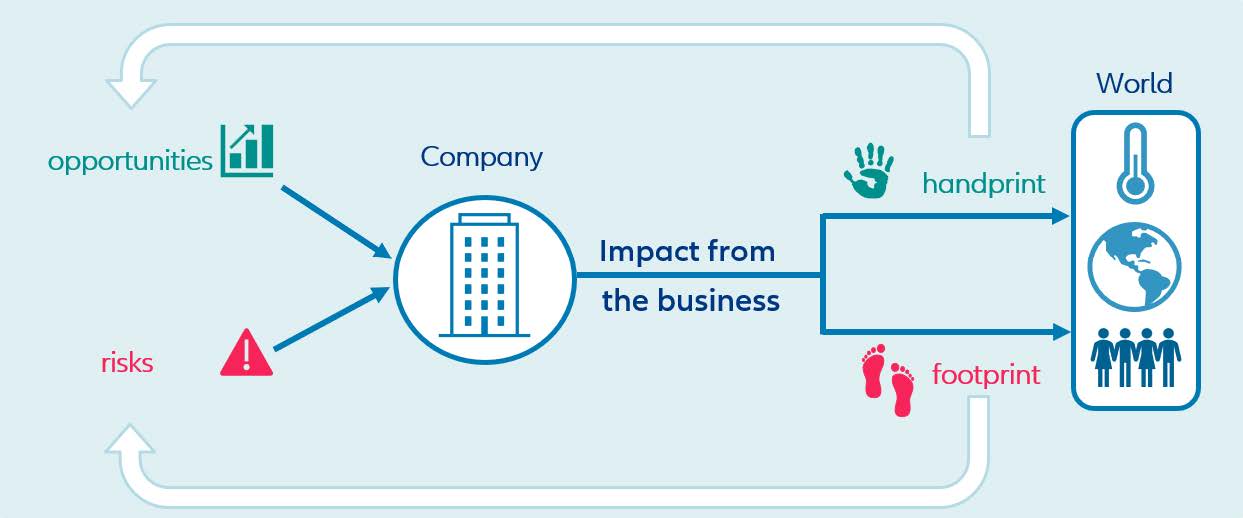
Exhibit 2 Diagram showing the concept of double materiality

Source: Allianz Global Investors, Sustainability Research, 2026

"To enable informed investment decision-making in both public and private markets, it is important to assess both the positive and negative financially material impacts of an investment opportunity. Identifying a company's footprint and handprint helps us understand both the material risks we need to anticipate and mitigate, as well as the potential opportunities that the company may be able to capture due to the sustainability-oriented solutions offered by its business model.

Both can be important drivers of resilience and long-term value creation. They also help investors understand how their portfolios contribute to environmental and social goals by distinguishing between companies that reduce harm through their operations and those whose products and services create positive outcomes."

Diane Mak, Head of Sustainability & Impact – Private Markets

Our approach to handprint and footprint

As we see transition solutions gain momentum as attractive long-term investments, handprint-oriented activities are increasingly aligned with structural growth themes like clean energy, sustainable agriculture, efficiency solutions and digital inclusion. Actively supporting the transition away from high emitters is central to sustainable, thematic and impact investing. Industry frameworks like the ICMA - Sustainable Finance Principles & guidance have helped strengthen the credibility and transparency of such approaches and facilitated use-of-proceed debt issuance via green bonds, social bonds and sustainability bonds.

Yet, a strong handprint alone is not sufficient. We need to recognise whether the achievement of positive impact overlooks significant negative impacts to assess appropriateness for inclusion in certain style funds.

We have built company profiles into our Sustainability Insights Engine (SusIE), as shown in Exhibit 3, which display a comprehensive range of metrics on separate footprint and handprint tabs, for example:

  • Footprint metrics – controversy flags, individual factor scores from our PSSii (Proprietary Sustainability Scores), carbon and net-zero alignment KPIs, and a DNSH (Do No Significant Harm) assessment outcome.
  • Handprint metrics – alignment with key taxonomies, sustainable investment classificationiii(according to our Proprietary Sustainable Investment Share), and SDG alignment shares with detailed positive contributions.
Exhibit 3: Utilities company contribution (handprint) to the SDGs

The numbers beside each SDG show the percentage of revenues in business activities that positively contribute to each SDG after a DNSH check. One business activity can contribute to several SDGs.

We believe that combining footprint and handprint into a single “net impact” assessment can obscure underlying opportunities and may not align with investor expectations. Investors need to be able to assess the magnitude of both the positive and negative impacts.

Footprint analysis and metrics have been the backbone of ESG approaches for a decade, with investors seeking to identify companies that are actively minimising or mitigating harm. Those reducing their footprints are often better positioned to manage risks, build resilience, and deliver long-term sustainable returns.

As the necessity and urgency to transition to a more resilient global economic model increases, we anticipate that more investors will push investee companies for clarification and measurement of their positive and negative impacts. The ability to reduce or mitigate footprint, while expanding handprint, is increasingly being aligned to value creation and protection, and we believe this is a hallmark of future-ready companies.

i For example Principal Adverse Impacts disclosure (for footprint and green taxonomies for handprint), and the EU Corporate Sustainability Reporting Directive (which integrates both)
ii Allianz Global Investors, ESG ratings - are they still relevant? 2026
iii In accordance with our proprietary sustainable investment share – a KPI which assesses the share of company revenue that is tilted towards sustainable activities.


Investing involves risk. The value of an investment and the income from it will fluctuate and investors may not get back the principal invested. Past performance is not indicative of future performance. This is a marketing communication. It is for informational purposes only. This document does not constitute investment advice or a recommendation to buy, sell or hold any security and shall not be deemed an offer to sell or a solicitation of an offer to buy any security.

The views and opinions expressed herein, which are subject to change without notice, are those of the issuer or its affiliated companies at the time of publication. Certain data used are derived from various sources believed to be reliable, but the accuracy or completeness of the data is not guaranteed and no liability is assumed for any direct or consequential losses arising from their use. The duplication, publication, extraction or transmission of the contents, irrespective of the form, is not permitted.

This material has not been reviewed by any regulatory authorities. In mainland China, it is for Qualified Domestic Institutional Investors scheme pursuant to applicable rules and regulations and is for information purpose only. This document does not constitute a public offer by virtue of Act Number 26.831 of the Argentine Republic and General Resolution No. 622/2013 of the NSC. This communication's sole purpose is to inform and does not under any circumstance constitute promotion or publicity of Allianz Global Investors products and/or services in Colombia or to Colombian residents pursuant to part 4 of Decree 2555 of 2010. This communication does not in any way aim to directly or indirectly initiate the purchase of a product or the provision of a service offered by Allianz Global Investors. Via reception of this document, each resident in Colombia acknowledges and accepts to have contacted Allianz Global Investors via their own initiative and that the communication under no circumstances does not arise from any promotional or marketing activities carried out by Allianz Global Investors. Colombian residents accept that accessing any type of social network page of Allianz Global Investors is done under their own responsibility and initiative and are aware that they may access specific information on the products and services of Allianz Global Investors. This communication is strictly private and confidential and may not be reproduced. This communication does not constitute a public offer of securities in Colombia pursuant to the public offer regulation set forth in Decree 2555 of 2010. This communication and the information provided herein should not be considered a solicitation or an offer by Allianz Global Investors or its affiliates to provide any financial products in Brazil, Panama, Peru, and Uruguay. In Australia, this material is presented by Allianz Global Investors Asia Pacific Limited (“AllianzGI AP”) and is intended for the use of investment consultants and other institutional/professional investors only, and is not directed to the public or individual retail investors. AllianzGI AP is not licensed to provide financial services to retail clients in Australia. AllianzGI AP is exempt from the requirement to hold an Australian Foreign Financial Service License under the Corporations Act 2001 (Cth) pursuant to ASIC Class Order (CO 03/1103) with respect to the provision of financial services to wholesale clients only. AllianzGI AP is licensed and regulated by Hong Kong Securities and Futures Commission under Hong Kong laws, which differ from Australian laws.

This document is being distributed by the following Allianz Global Investors companies: Allianz Global Investors GmbH, an investment company in Germany, authorized by the German Bundesanstalt für Finanzdienstleistungsaufsicht (BaFin); Allianz Global Investors (Schweiz) AG; in HK, by Allianz Global Investors Asia Pacific Ltd., licensed by the Hong Kong Securities and Futures Commission; in Singapore, by Allianz Global Investors Singapore Ltd., regulated by the Monetary Authority of Singapore [Company Registration No. 199907169Z]; in Japan, by Allianz Global Investors Japan Co., Ltd., registered in Japan as a Financial Instruments Business Operator [Registered No. The Director of Kanto Local Finance Bureau (Financial Instruments Business Operator), No. 424], Member of Japan Investment Advisers Association, the Investment Trust Association, Japan and Type II Financial Instruments Firms Association; in Taiwan, by Allianz Global Investors Taiwan Ltd., licensed by Financial Supervisory Commission in Taiwan; and in Indonesia, by PT. Allianz Global Investors Asset Management Indonesia is licensed and supervised by Indonesia Financial Services Authority (OJK). Investment through mutual funds contains risk. Before deciding to invest, prospective investors must read and understand the prospectus. Past performance does not guarantee/reflect an indication of future performance.

AdMaster: 5903962

Allianz Global Investors

You are now leaving this website and being redirected to the below website. This does not imply any approval or endorsement of the information by Allianz Global Investors contained in the redirected website nor do Allianz Global Investors accept any responsibility or liability in connection with contained therein.