
US investment grade credit: AI propels issuance in 2026


While macro volatility and AI debt issuance headlines created noise, strong fundamentals and elevated rates have created returns.
Key takeaways
- Although AI debt issuance is likely to moderate in the remainder of 2026, it is still on course to end the year at nearly double last year’s total, driven by record capital expenditure.
- We think the top AI companies, or hyperscalers, remain high-quality credits with healthy balance sheets and diversified revenue streams.
- Despite a broadly positive market environment, spread volatility is likely to continue, potentially creating attractive entry points to high-quality issuers.
US investment grade corporate credit ended the first half of 2026 relatively unaffected by conflict in Iran and the massive (and ongoing) wave of AI-related debt issuance. Despite tight spreads, elevated rates are keeping risk asset returns attractive, and investor demand remains high. The remainder of the year looks like it will offer more of the same, with copious issuance and tight spreads anchored by healthy fundamentals. Periods of spread volatility are likely to persist, but we think they can be used as opportunities to buy into high-quality issuers.
Here is our outlook for US investment grade credit in the remainder of 2026.
Positive returns in a bumpy year
Much like other risk assets, US investment grade credit experienced a volatile start to 2026. Early weakness was tied to growing concerns over AI-driven disruption in software and its implications for business development company (BDC) exposure, while the escalation of the Iran conflict and the resulting rise in oil prices intensified the risk-off tone later in the first quarter. A record wave of new issuance also weighed on market technicals.
Yet performance improved in the second quarter as geopolitical tensions eased and record corporate earnings drove renewed investor optimism. The de-escalation in Iran, strong first-quarter earnings and new highs in equities supported risk sentiment.
Across subsectors, performance was positive but uneven. Utilities outperformed both financials and industrials, supported by strong demand tied to data centre growth as well as the sector’s more defensive characteristics. Industrials and financials, by contrast, faced heavier supply pressure during the first half, with hyperscalers and banks accounting for a meaningful share of new issuance and driving net supply above prior-year levels.
AI is a key theme for investment grade
In the remainder of 2026, we expect that issuance will remain exceptionally strong, but robust yield-driven demand will keep technicals in check. Volatility is likely to remain elevated, particularly if rate swings persist or AI-related spending disappoints. But, while these risks could put pressure on spreads in the short term, they also create attractive opportunities for active managers to add risk.
AI will be a key investment theme to watch. AI-related financing has broadened beyond the largest technology issuers and is reshaping the composition of the investment grade market, with more than 16% of the US corporate index now tied to artificial intelligence (source: JP Morgan Research, as at 30 June 2026).
AI helped to propel investment grade corporate bond issuance at a record pace in the first half of 2026. We expect full-year issuance to surpass the prior record set in 2020, largely thanks to AI-related issuance. The scale of the AI boom is made clear when we see that in the seven months ending 31 July 2026, there was more AI-related bond issuance than in the previous four years combined (Exhibit 1).
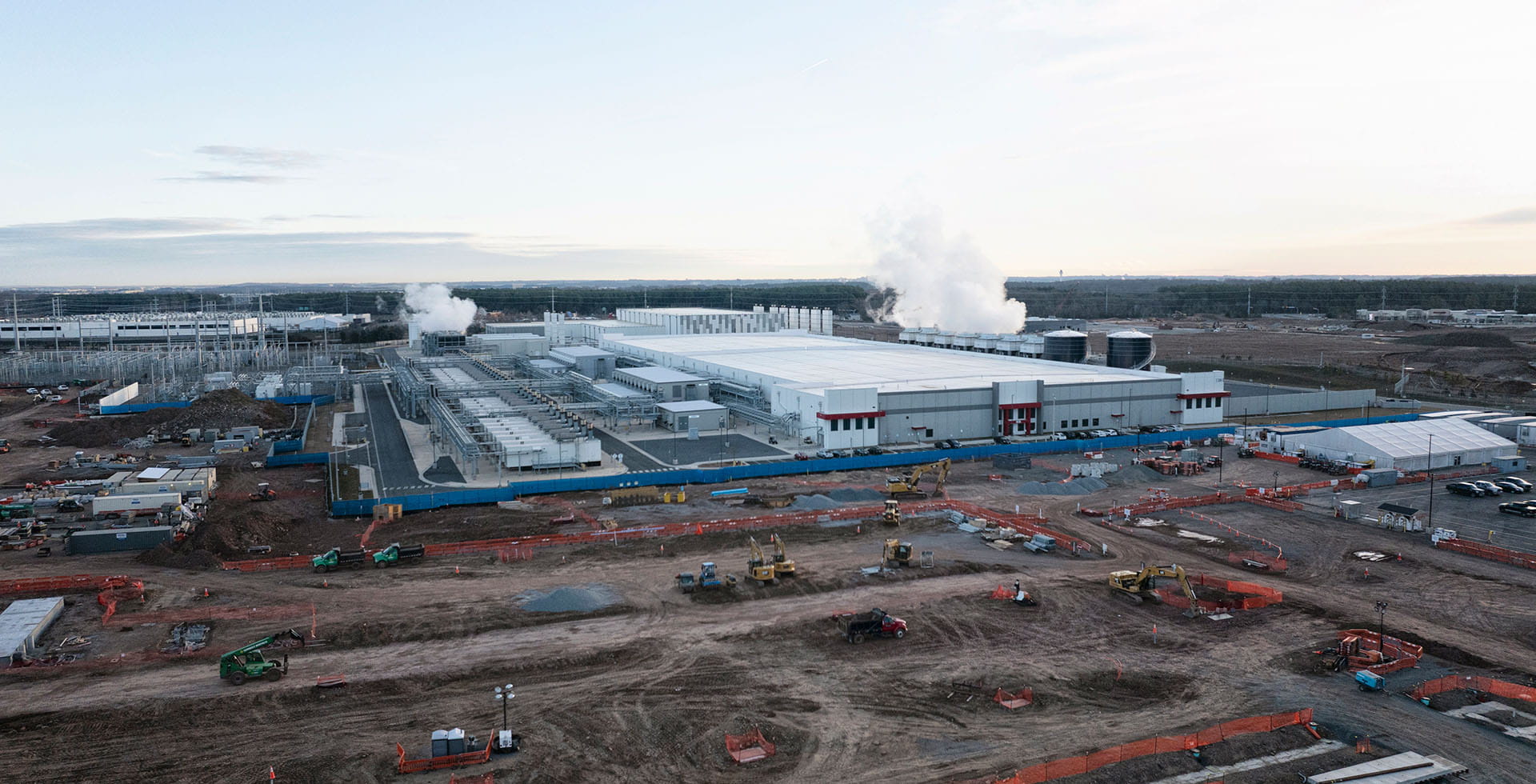
This issuance bonanza is primarily driven by hyperscaler capital expenditure expectations, which have been revised higher and remain extremely elevated through 2026 and 2027 (source: Morgan Stanley Research estimates, company data, as at 30 June 2026). Not only is hyperscaler capex at record highs, more of it is flowing through to the investment grade market than previously thanks to public markets’ absorption of hyperscalers’ off-balance-sheet financing (in the form of data centre project bonds).
While heavy issuance can periodically create supply indigestion and pressure credit spreads, that dynamic has been limited mostly to hyperscalers and the technology sector, both of which now trade modestly wide of the broader index. We have seen a steepening in credit curves among hyperscalers, whereas the broad index credit curve remains fairly flat.
Strong demand from a broad global investor base has provided an important counterbalance, supported by the asset class’s historically elevated yields. US domestic fund flows have been solid, helped along by strong insurance demand from robust annuity sales. Overseas demand has benefited from steady Asian participation, including renewed interest from Taiwan in the long end of the curve.
We expect demand to continue to help absorb the strong pace of new issuance and keep technicals supportive. However, a meaningful rally in yields could slow the pace of future inflows and pressure spreads should supply remain historically elevated.
Exhibit 1: AI-related issuance of US investment grade bonds this year

As of 31 July 2026. Source: JP Morgan Research.
Fundamentals remain healthy and ratings momentum positive
Credit fundamentals remain solid heading into the second half, supported by strong earnings, stable credit metrics and positive ratings momentum. Despite elevated issuance, we believe hyperscalers remain high-quality credits with healthy balance sheets and lower leverage than the broad market. As a result, they continue to have the capacity to fund additional AI-related investment before credit metrics come under meaningful pressure.
More broadly, leverage remains healthy across the US investment grade market despite a modest year-on-year increase, and ratings momentum has improved following a weaker start to the year. So far this year, the upgrade-to-downgrade ratio is back above the 2025 ratio – with the second quarter of the year seeing the largest number of net upgrades since the first quarter of 2024 (Exhibit 2).
At a macro level, we expect economic growth to remain resilient, supported by robust AI investment, fiscal spending and higher-income consumption aided by a generational wealth transfer. However, the consumer is becoming a less reliable driver, as lower-income households face cumulative inflation, higher borrowing costs and slower real income growth. As a result, the expansion is increasingly dependent on continued AI spend, which could be periodically pressured if productivity or revenue fail to meet expectations.
While tight spreads leave less room for disappointment from slower growth, inflation surprises or policy volatility, we believe elevated investment-grade yields still provide a meaningful cushion and an attractive opportunity to lock in longer-term income (Exhibit 3).
Exhibit 2: Ratings momentum shifted positive in the second quarter of 2026

As of 30 June 2026. Source: JP Morgan Research.
Exhibit 3: US investment grade yields are above their 10-year average

As of 30 June 2026. Source: Voya IM, Bloomberg Indexes.
The software selloff creates potential opportunities for credit pickers
The outlook may also offer opportunities for active managers to generate outperformance by security selection. The software sector is a good example. Although software companies represent a small portion of the investment grade corporate bond market (compared with private credit and senior bank loans), fears of disruption by AI have created opportunities within the sector.
Across the sector, we have developed a framework to help differentiate winners and losers from AI boom. Specifically, we look at where the companies’ products and services fall across a continuum ranging from deterministic to probabilistic use cases.
Deterministic systems of records define what is true in a workflow and create the audit trail that enables reconciliation, policy enforcement and compliance. Probabilistic systems rely on pattern recognition and are suited to search, summarisation, drafting and other unstructured tasks.
In general, we believe probabilistic products are more likely to be disrupted by AI.
A positive picture in the coming months
Overall, we remain positive on US investment grade credit in the remainder of 2026. When combined with healthy fundamentals, the current environment can continue to anchor credit spreads, even near decade-tight levels. Furthermore, elevated starting yields provide a meaningful cushion if slower growth and policy uncertainty weigh on spreads.